
The lawyer recounts the extraordinary chain of events that led to his admission into the University of Abuja after repeated setbacks
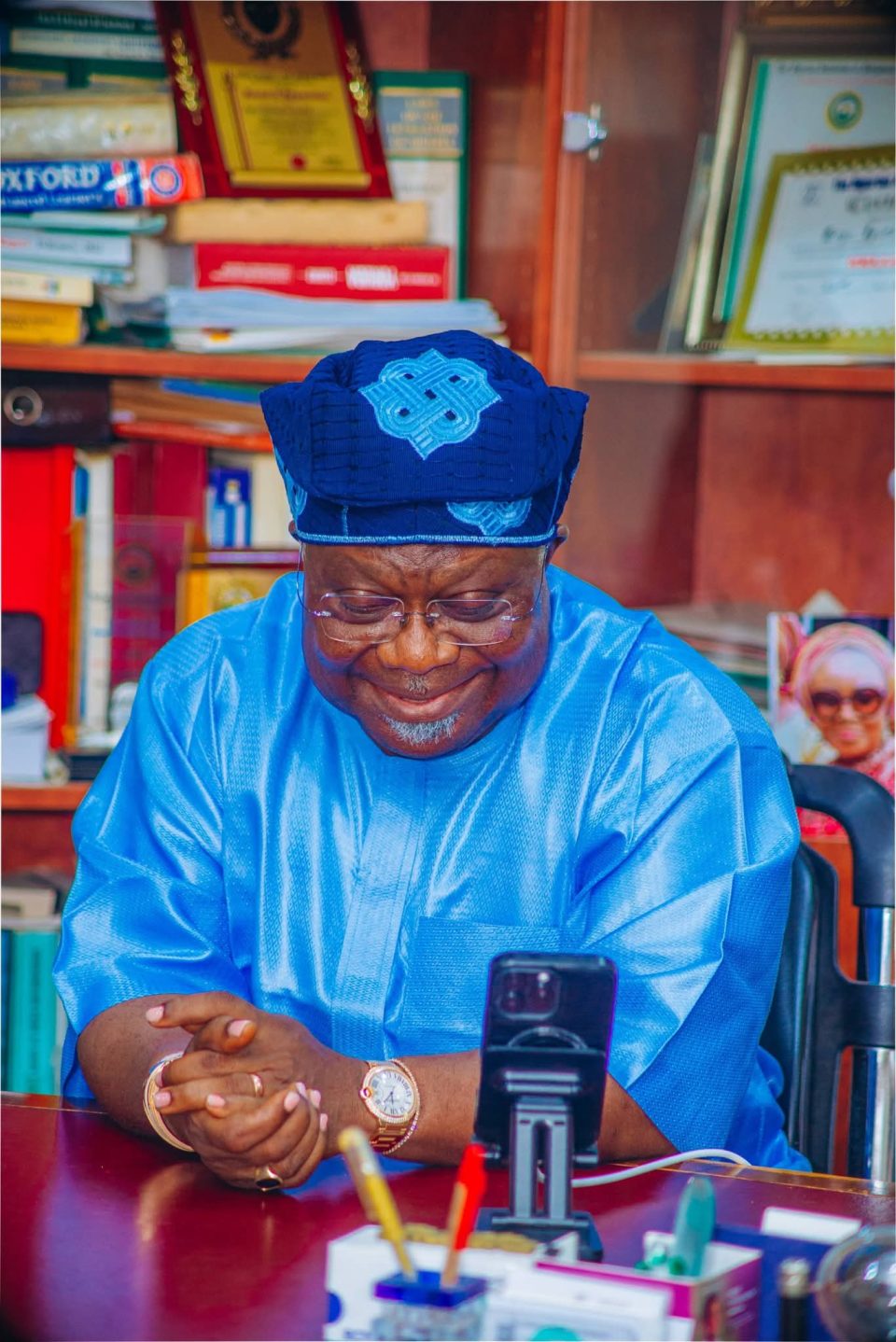
ABUJA — Lawyer and public interest advocate, Pelumi Olajengbesi, has recounted how an unexpected encounter with Senator Iyiola Omisore changed the trajectory of his life and ultimately paved the way for his legal career.
Olajengbesi, who shared the account in commemoration of Senator Omisore’s birthday, described the former senator’s intervention as the decisive moment in a long and uncertain journey that had taken him from an abandoned ambition to study Medicine through years of financial hardship, student activism and repeated failures to secure admission to study Law.
“I was not looking for Senator Omisore,” Olajengbesi said, explaining that his encounter with the former senator was the product of a series of events he could not have anticipated.
The journey began in Ondo Town, Ondo State, where Olajengbesi completed his secondary education at Holy Flocks of Christ Secondary School as a science student and served as Senior Prefect Boy.
His childhood ambition was to become a medical doctor. He excelled particularly in Further Mathematics, although his relatively poor interest in Biology eventually made Medicine an increasingly difficult prospect. His teachers considered Engineering a more suitable option.
Unable to secure admission into Medicine, he began teaching Further Mathematics while preparing for another JAMB attempt.
An encounter with a friend, Akinseye Henry, popularly known as Asiwaju, subsequently altered his immediate plans. Rather than remain idle while awaiting another opportunity, he was advised to obtain a qualification from a College of Education, secure employment and eventually finance his medical ambition.
Olajengbesi followed the advice and graduated from the College of Education, Ikere-Ekiti, with an NCE in 2006.
Employment, however, remained elusive.
He subsequently became involved in development initiatives, volunteering and student activism, while also participating in the Integrity Icons Organisation, which he had co-founded with friends.
His growing involvement in student activism eventually influenced another career decision.
Friends encouraged him to consider Law.
He accepted the suggestion, completed the necessary O’Level requirements and sat for JAMB. Although he passed the examination, admission to study Law at the University of Abuja did not materialise.
Determined to try again, Olajengbesi travelled to Northern Nigeria with his friend, Ayo Akinniyi, in search of new opportunities. They explored admission possibilities at Ahmadu Bello University, Zaria, and the University of Abuja.
The attempts again proved unsuccessful for Olajengbesi, while Akinniyi eventually secured admission to study Mathematics at the University of Abuja.
As his financial circumstances worsened, obtaining another JAMB form became a challenge.
His participation in student organisations brought him regularly to the National Assembly, where he and other young activists sought opportunities to present proposals to politicians and solicit assistance. Many of those visits ended without access to the complex.
Eventually, he returned to Ondo State and stayed with his close friend, Ayodeji Eminowa, popularly known as Papa DJ.
It was during a visit to a political meeting in Akure that another important encounter occurred.
Olajengbesi had joined a group of students visiting the late Dr. Olaiya Oni, then Ondo State Chairman of the Labour Party. He was given an opportunity to speak and subsequently met Akin Akinbobola.
Akinbobola asked about his circumstances.
When Olajengbesi disclosed his intention to study Law and his inability to afford another JAMB form, Akinbobola immediately purchased the form for him and offered additional assistance during his preparation.
Olajengbesi later scored 270 in JAMB.
He returned to Gwagwalada to await admission, only to encounter another obstacle.
The University of Abuja announced that the number of applicants had increased substantially and that the Faculty of Law could admit only about 100 students. The institution subsequently introduced a Post-UTME screening exercise.
The form cost ₦2,700.
Olajengbesi had only ₦10.
His opportunity to sit for the examination appeared lost until he learnt, during a protest against the screening exercise, that registration would close that same day.
With the deadline approaching, he turned to his friend Akinniyi, whose mother provided the money required to obtain the form.
He registered, sat for the examination and emerged confident of his performance.
But when the merit list was published, his name was absent.
The supplementary list produced the same result.
The final Vice-Chancellor’s List also did not contain his name.
For Olajengbesi, the Law ambition appeared to have ended.
He subsequently returned to volunteering and student activities while considering what direction his life would take.
Then another idea emerged.
He developed a youth-oriented programme intended to create a simulation of the National Assembly and encourage young Nigerians to participate in national discourse.
Believing the initiative could be implemented through the Office of the President of the Senate, he wrote repeatedly to Senator David Mark, who was Senate President at the time.
There was no immediate response.
Approximately two months after his failed admission attempt, and just as he was preparing to return to Akure, he received a telephone call from the Office of the Senate President.
He was informed that he had been scheduled to meet the Senate President the following morning.
He cancelled his journey and prepared for the meeting.
At the appointed time, however, his name was initially missing from the visitor list at the National Assembly gate. After hours of uncertainty, another list arrived containing his name, allowing him access to the complex.
Rather than meeting the Senate President directly, he was taken to an official in the Senate Wing who questioned him about the purpose of his proposed meeting.
He was given two minutes to explain his idea.
After listening, the official explained the extensive constitutional, legislative, constituency, party and official responsibilities attached to the office of the Senate President, noting the practical limitations on his ability to personally attend to the enormous number of requests from young Nigerians across the country.
Olajengbesi assumed that the meeting had effectively ended.
Instead, the official handed him ₦50,000.
He was then advised to approach the senator representing his senatorial district and consider starting the initiative on a smaller scale.
When Olajengbesi identified his local government as Oriade in Osun State, the official mentioned Senator Iyiola Omisore and asked whether he knew him.
He did not.
The official immediately telephoned Omisore and informed him that a young man from his senatorial district needed to see him.
Olajengbesi was directed to the senator’s office and escorted there by a police officer.
At Omisore’s office, he was taken directly into the senator’s presence.
Omisore asked about the programme for which the Senate President had referred him.
But Olajengbesi gave an unexpected answer.
His “programme” was not the youth initiative.
“I want admission into the University of Abuja to study Law,” he told the senator.
Omisore reportedly sought clarification and was informed of Olajengbesi’s repeated unsuccessful attempts to secure admission.
The senator then contacted the Vice-Chancellor of the University of Abuja.
According to Olajengbesi, Omisore requested that he be admitted to study Law despite the lateness of the academic session.
The Vice-Chancellor reportedly raised concerns about the advanced stage of the academic calendar, including the commencement of classes and approaching examinations.
Omisore nevertheless persisted.
Eventually, the Vice-Chancellor agreed that Olajengbesi’s details should be forwarded.
The admission that had appeared impossible was subsequently secured.
Olajengbesi resumed at the Faculty of Law the following morning.
On the same day, a new admission list was released containing seven additional Law students.
His registration number was 307.
He had entered the programme midway through the semester and, by his account, had become one of the final students admitted during that exercise.
Reflecting on the journey years later, Olajengbesi acknowledged that his eventual legal career was made possible by several individuals who supported him at different stages.
He, however, singled out Senator Omisore’s intervention as the decisive breakthrough.
“While many people helped me throughout the process, Distinguished Senator Iyiola Omisore made my journey to becoming a lawyer possible,” he said.
The account offers a striking illustration of how an apparently unrelated encounter can intersect with a long-running personal struggle. Olajengbesi had gone to the National Assembly seeking access to the Senate President for a youth initiative. Instead, the chain of events took him to a senator he had neither known nor intended to meet — and ultimately secured the university admission that had eluded him through several attempts.
Today, Olajengbesi is a lawyer and public interest advocate.
He is also the Accord candidate for the Oriade/Obokun Federal Constituency in the 2027 House of Representatives election.
