
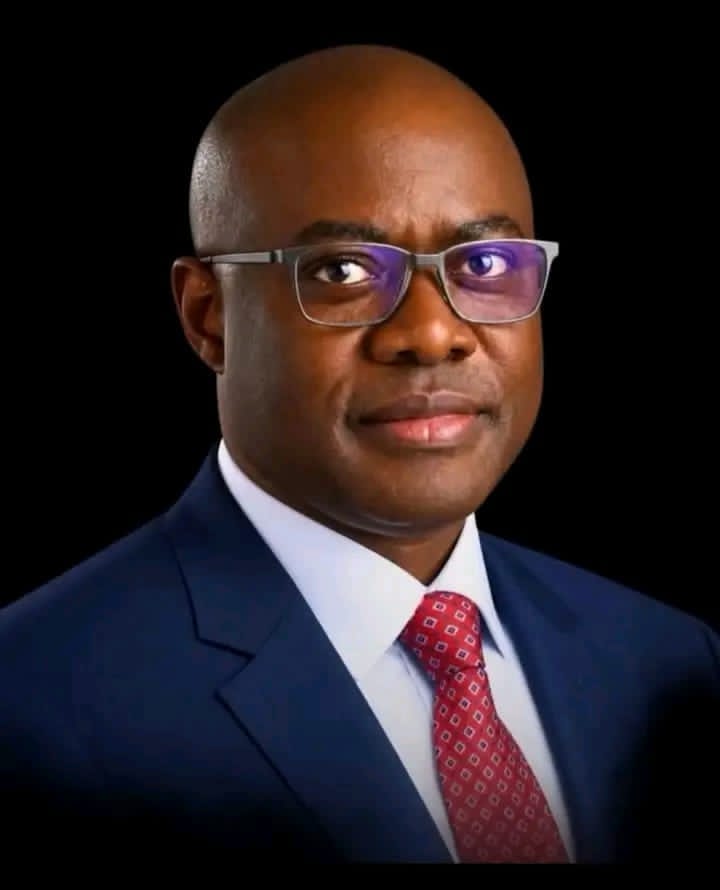
By Barrister Ayodele Adekanmbi
Some stories are told to preserve memory. Others are told because they reveal something about the character of a society. The story of Persons with Disabilities in Oyo State under the administration of Governor Seyi Makinde belongs to the latter.
It is, at its deepest level, a story about dignity.
For too long, disability in our society was approached primarily through the language of pity. The person came after the condition; ability was obscured by impairment; and dependence was often mistaken for destiny. Persons with Disabilities were frequently seen as recipients of compassion rather than citizens entitled to opportunity, representation and a meaningful place in the architecture of society.
But there is a profound difference between helping people survive and creating the conditions in which they can live with dignity.
This is where the significance of Governor Seyi Makinde’s intervention lies. The important story is not merely that Persons with Disabilities received attention. It is that they increasingly became visible within the consciousness of governance — not as an afterthought, not as a ceremonial constituency, but as citizens whose aspirations belong within the larger development story of Oyo State.
That distinction is philosophical as much as it is political.
A government reveals its moral character by the people it refuses to leave behind.
When those who have historically lived at the margins are deliberately brought closer to the centre, governance becomes more than the administration of resources. It becomes an instrument for correcting the inequalities that history has normalised.
The journey from the roadside to the palace is therefore not simply a journey through physical space. It is a journey from exclusion to belonging.
The palace, in this context, is more than a building. It is a symbol of power, recognition and citizenship. When a person with a disability walks into that space, the significance is larger than the ceremony itself. It says that the doors of power are not reserved for the physically perfect, the economically privileged or the socially celebrated. It says that citizenship has no disability clause.
There is something profoundly human about seeing people who were once regarded principally through the lens of vulnerability occupying spaces traditionally associated with authority and influence. The wheelchair does not diminish the dignity of the person sitting in it. The disability does not cancel intelligence, ambition, creativity or leadership. What diminishes people is not disability; it is a society that refuses to see beyond it.
This is why the emerging narrative in Oyo State deserves to be understood beyond the vocabulary of welfare.
Welfare is important, but dignity demands more. It demands access to education, economic opportunity, representation, participation, accessibility and the freedom to determine one’s own future. It demands that Persons with Disabilities should not merely be helped but heard; not merely accommodated but included; not merely remembered but represented.
The ultimate measure of inclusion is not how generously society gives to its vulnerable citizens. It is how seriously it recognises their capacity to contribute.
That is the deeper promise of the work being done.
A young person with a disability who begins to see possibility where there was once resignation has experienced a form of liberation that no statistic can adequately measure. A family that once saw disability as an inherited burden begins to see it as a circumstance that can be navigated with opportunity and support. A citizen who once stood outside the room is invited inside — and, perhaps most importantly, is allowed to speak.
These are not small changes.
Societies are transformed when the people who were once spoken about begin to speak for themselves.
Governor Seyi Makinde’s approach to Persons with Disabilities should therefore be understood as part of a larger question about what government owes its people. The answer cannot be measured solely in roads constructed, buildings completed or figures published in budget documents. Government also owes citizens recognition. It owes them the assurance that their humanity is not conditional upon their circumstances.
The work is, of course, unfinished. No responsible advocate would suggest otherwise. Barriers remain, opportunities must continue to expand, and attitudes that have taken generations to form cannot disappear overnight.
But history is often changed not by the claim that everything has been achieved, but by the courage to change the direction of travel.
And the direction matters.
From pity to possibility.
From exclusion to participation.
From charity to rights.
From the margins to the centre.
From being treated as burdens to being recognised as contributors.
Perhaps that is why the image of Persons with Disabilities sitting in the palace carries such emotional force. It is not merely about where they sit. It is about what their presence means.
They are no longer simply waiting outside the story.
They are becoming part of its authorship.
And that, ultimately, is what good governance should do: not create citizens who depend forever on the benevolence of power, but create a society in which every citizen can encounter power without shame, participate without apology, and aspire without limitation.
The greatest measure of inclusion is not that the powerful remember the excluded.
It is that the excluded eventually discover that they were never meant to remain excluded.
That is more than a story to tell.
It is a story about dignity restored, citizenship reclaimed and possibility rediscovered.
